


BETTER STABILITY FOR LOWER DENTURES
Suction / SEMCD Dentures in Orléans
Lower dentures can be difficult to keep stable. Unlike an upper denture, which has the roof of the mouth to help create support and suction, a lower denture sits on a much smaller ridge surrounded by the tongue, cheeks, and other moving tissues. This can cause some lower dentures to lift, shift, or rock when eating and speaking.
At Orléans Denture Clinic, we offer suction dentures using the SEMCD (Suction Effective Mandibular Complete Denture) technique. This approach carefully accounts for the shape and movement of your mouth to help create a seal between the lower denture and surrounding tissues.
For suitable patients, suction dentures can provide a more stable, comfortable fit with less reliance on adhesives and no implants.

Secure Suction
Keeps lower denture stay
firmly in place.

No Adhesive
No glue or pastes needed
to keep it secure.

Comfortable Fit
Made to fit the natural
shape of your mouth.

Non-Surgical
No dental implants or surgery required.
HOW IT WORKS
What to Expect
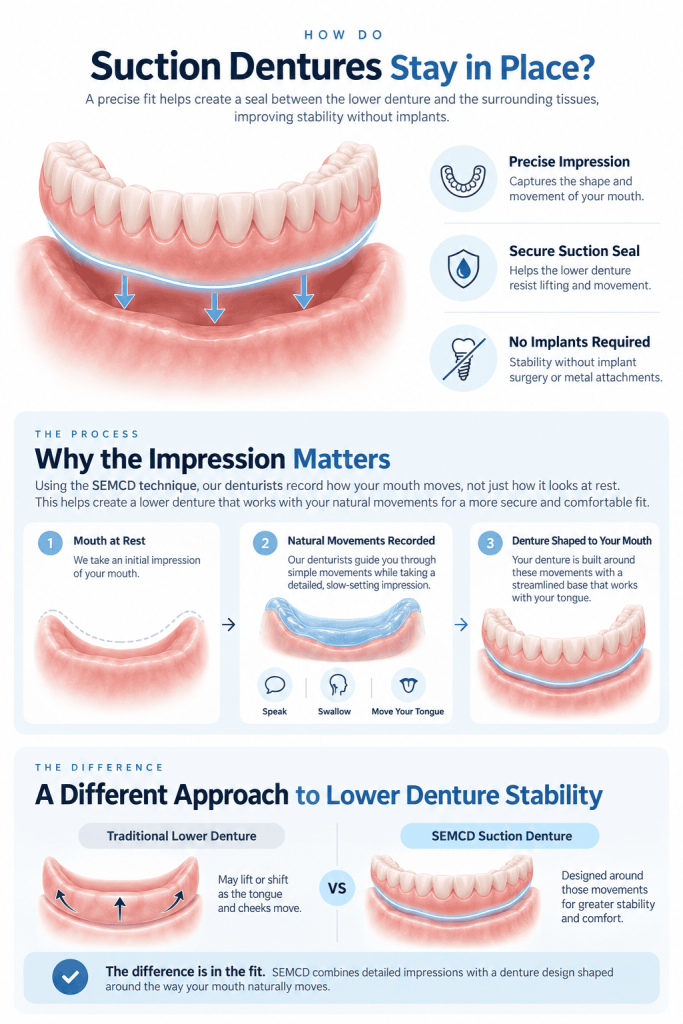
Creating your suction denture starts with understanding how your mouth moves, not just how it looks at rest. Your tongue, cheeks, and lips are constantly moving when you eat, speak, and swallow, and those movements can affect how well a lower denture stays in place.
Using the SEMCD technique developed by Dr. Jiro Abe, our denturists guide you through simple movements while taking detailed impressions. You may be asked to swallow, move your tongue, or say certain words. This helps us shape your denture around the way your mouth naturally functions for a more secure and comfortable fit.
Our denturists will guide you through each stage, from your consultation and detailed impressions to bite and tooth selection, trial fitting, final delivery, and any adjustments needed to fine-tune your comfort and fit.
SUCTION VS. TRADITIONAL DENTURES
How Suction Dentures Compare
IS SEMCD RIGHT FOR YOU?
Are Suction Dentures Right for You?
- check_circle Have a lower denture that feels loose or unstable
- check_circle Rely on adhesive and want to stop
- check_circle Can't have implants due to health, cost or preference
- check_circle Have low bone ridges
- arrow_forward Your gum tissue is severely compromised
- arrow_forward You have significant dry mouth
- arrow_forward Implant-retained dentures are a better match for your bone, health and budget
Suction can usually only be confirmed once the final impression is taken.
TESTIMONIALS
Client Reviews
Questions About Suction Denture?
Suction Denture FAQs
SEMCD stands for Suction Effective Mandibular Complete Denture. It is a technique developed by Dr. Jiro Abe to improve the stability of complete lower dentures by creating an effective seal between the denture and the surrounding oral tissues.
Unlike conventional impressions that primarily record the shape of the mouth, the SEMCD technique considers how the tongue, cheeks, lips, and other tissues move during everyday functions such as speaking and swallowing. This helps the denture work with those movements and can improve lower denture stability for suitable patients.
Yes. Although the SEMCD technique was developed primarily for lower dentures, suction principles can also help improve the retention of upper dentures. This may be particularly helpful for people who have difficulty keeping an upper denture secure due to factors such as a narrow palate or changes in the upper jawbone.
A precise impression and carefully designed fit help create an effective seal between the denture and the surrounding tissues. Your denturist can assess your mouth to determine whether this approach could improve the stability of your upper denture.
Suction dentures and implant-supported dentures provide stability in different ways. Suction dentures use the fit and seal between the denture and oral tissues, while implant-supported dentures gain additional retention from dental implants placed in the jaw.
Suction dentures may be worth considering if you want greater lower-denture stability without implant surgery or if implants are not suitable for you. Implant-supported dentures may provide greater retention for some patients. Your oral health, anatomy, treatment goals, preferences, and budget can all influence which option is appropriate.
Suction dentures typically last about five to ten years with proper care. However, your gums and jaw naturally change over time, which can gradually affect the fit and suction of your dentures.
Regular checkups and periodic relining can help maintain a secure fit and effective seal. Your denturist can monitor these changes and recommend a reline, adjustment, or replacement when needed.
Suction dentures should be cleaned every day and handled carefully to protect their fit and condition. Remove and rinse your dentures after meals when possible, and clean them using a soft denture brush and a cleaner intended for dentures. Avoid abrasive toothpaste and very hot water, which can damage denture materials. Follow the cleaning and overnight-storage instructions provided by your denturist.
If your suction denture starts feeling loose or no longer maintains a secure seal, have the fit checked rather than trying to correct it with additional adhesive.
CONTACT US
Book a Free Consultation
The Orléans Denture Clinic and Implant Centre provides patients with high-quality, custom dentures and implants.